
BioGills provide effective wastewater treatment at lower energy and lower cost. By focusing the power of microorganisms in a unique, above ground bioreactor, BioGills treat wastewater more efficiently than other biological systems.
There are millions of species of bacteria in nature and they play an essential role in maintaining the ecology of the earth. In fact microorganisms, bacteria and fungi, are nature’s best decomposers and recyclers and are used in the majority of wastewater treatment systems.
Most conventional secondary treatment technologies reply on pumping oxygen to a suspended culture of microorganisms, known as biomass. This process is power hungry and can account for up to 50% of the power costs for conventional plants.
In an innovative way, BioGill reverses this by growing the biomass in air and pumping the wastewater to the biomass. The attached biomass grows as biofilm in air, with an infinite supply of oxygen. With the advances in liquid pumping, the process is far more efficient and cost effective when compared to conventional treatment systems.
Biomass reaches the required sludge age naturally. As the biofilm grows in size, outer layer biomass becomes substrate limited and eventually dies and sloughs off. Unlike conventional secondary treatment where the operator is constantly monitoring the MLSS and changing WAS rates, sludge age in a BioGill system is optimised naturally.
Above ground accommodation for bacteria and fungi
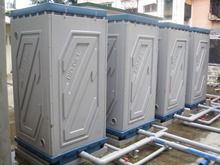
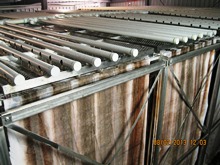
BioGills are specially built bioreactors that provide an ideal attached medium for microorganisms to grow. BioGill units use patented, flexible substrate known as "gills". These gills are at the heart of every BioGill, supplied in multiple, suspended vertical loops. Wastewater is gravity fed down the surface of the gills. Bacteria and other microorganisms grow on the gills, consuming nutrients out of the waste stream.
Cleverly designed spacers between each gill set ensures an adequate supply of oxygen from the atmosphere. With the increased oxygen, a healthy, active biomass grows that is 10 to 15 times greater than conventional biological systems.
BioGills are the secondary stage of the wastewater treatment train, with primary treatment upstream and tertiary treatment downstream.
Oxygen and fungi
Most existing technologies use large tanks housing bacteria which are submerged in water and aerated by energy hungry blowers and maintenance hungry diffusers.
BioGills are above ground so oxygen is freely available. This allows for the growth of a much more diverse and complicated ecosystem which includes many species unable to grow in conventional plants, species such as fungi. The fungal biomass is much more effective than bacterial biomass in removing nutrients from the liquid stream.